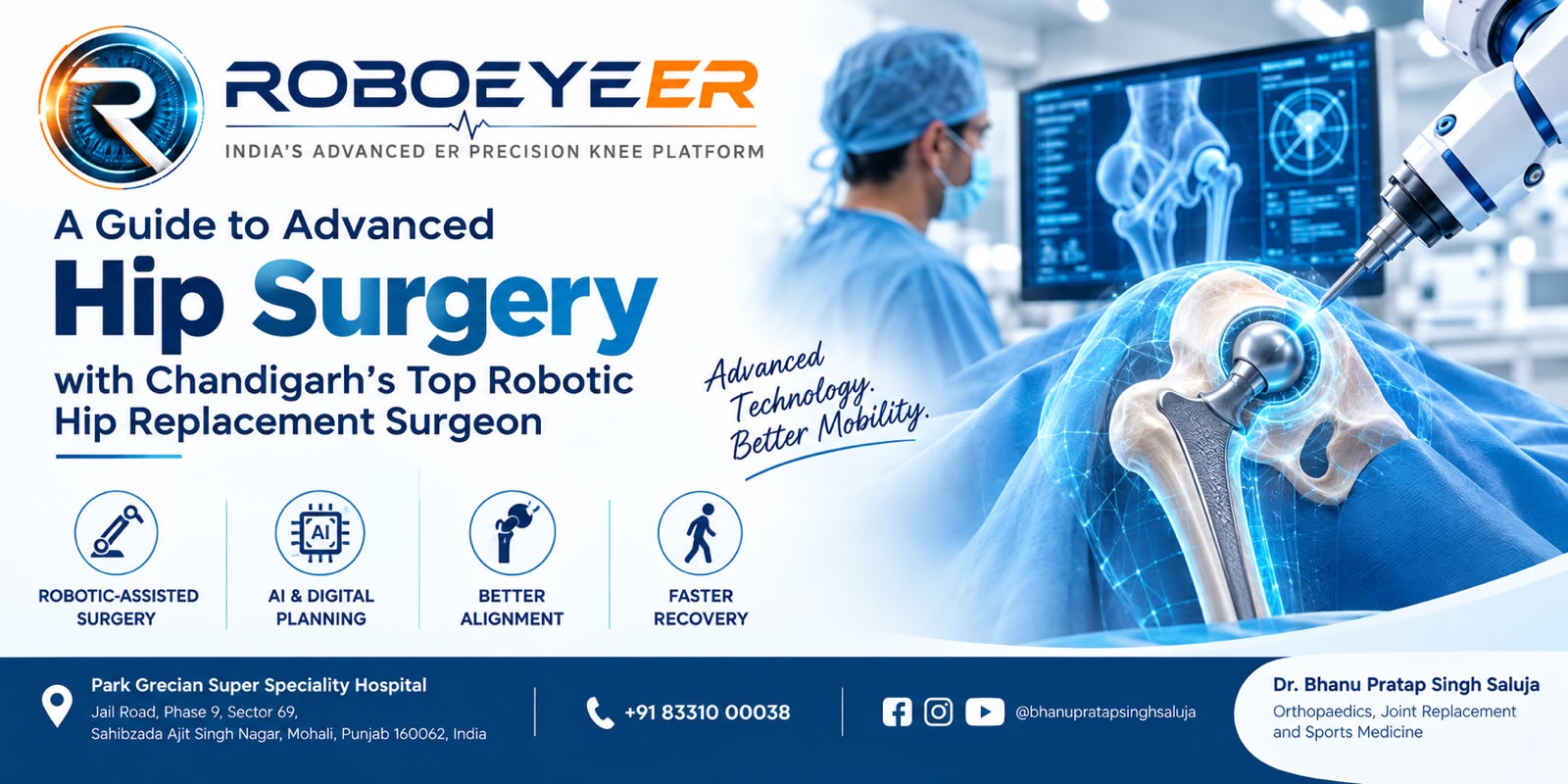
Best robotic hip replacement surgeon Chandigarh
Everyday tasks like walking, climbing stairs, sitting comfortably, and getting out of bed might become more challenging when hip discomfort is present. Hip replacement surgery may be considered if medicine, physical therapy, and other nonsurgical treatments are no longer able to offer adequate relief. Orthopedic advancements have made it possible to support surgeons during joint replacement procedures with robotic-assisted techniques and digital planning tools.
Knowing your alternatives for treatment is a crucial first step while looking for the Best robotic hip replacement surgeon Chandigarh. In robotic-assisted hip replacement, a surgeon’s clinical knowledge is combined with technology that supports surgical planning and, depending on the system, guides specific steps of the process.
Orthopedic physician Dr. Bhanu Pratap Singh Saluja specializes in robotic-assisted hip and knee surgery as well as joint replacement. During a professional visit, patients contemplating advanced hip treatment should talk about their diagnosis, the current technology, and the possible advantages and drawbacks of surgery.
Robotic Hip Replacement Surgery: What Is It?
In a surgical procedure known as “robotic-assisted hip replacement,” an orthopedic surgeon employs specialized technology to support certain elements of joint replacement. Artificial components intended to restore function and lessen joint disease-related pain are used to replace the damaged hip joint components.
A ball-and-socket joint makes up the hip. Walking, bending, and leg rotation are made possible by the rounded head of the thigh bone fitting into a socket in the pelvis. Avascular necrosis, some fractures, and severe osteoarthritis are among the conditions that can harm this joint and limit mobility.
The surgeon replaces damaged joint surfaces with appropriate new components during hip replacement. Technology may help with preoperative planning, anatomical evaluation, implant placement, or intraoperative guidance, depending on the robotic system.
Robotic help does not imply that the full task is carried out by a robot on its own. Clinical judgments and the surgery are still the responsibility of the orthopedic surgeon.
How Does Hip Replacement with Robotic Assistance Operate?
The patient’s anatomy, the surgeon’s preferred method, and the technology employed all influence the precise procedure. The following phases are typical of a therapeutic pathway.
1. Thorough Evaluation and Diagnosis
Your symptoms, medical history, physical examination findings, and imaging data are all reviewed by the surgeon. To evaluate joint damage and decide whether hip replacement is necessary, X-rays and other tests may be advised.
2. Digital Planning for Surgery
Certain robotic systems assist the surgeon in planning implant size, location, and alignment by using imaging or anatomical measurements. Creating a plan appropriate for the patient’s anatomy is the goal.
Different systems require different kinds of imagery and have different planning capabilities.
3. Surgery Assisted by Technology
The intended procedure is carried out by the surgeon using the chosen surgical method and any robotic guidance that is available. In order to complement certain surgical stages, technology may offer measurements or feedback.
4. Rehabilitation and Monitoring
The medical staff offers advice on walking, exercising, managing pain, caring for wounds, and scheduling follow-up appointments after surgery. Patients can progressively regain their strength, movement, and confidence with the aid of rehabilitation.
Robotic Hip Replacement’s Potential Advantages
When looking at robotic hip replacement in Chandigarh, patients frequently want to discover how the technology might be different from traditional surgery. The system, the surgeon’s experience, and the patient’s unique situation all influence the possible benefits.
More Customized Surgical Scheduling
The surgeon may use digital planning to assess the patient’s anatomy and choose the right implant size and location. Because each patient has different hip anatomy and joint injury, customized planning is very important.
Assistance with Implant Positioning
Robotic aid may offer direction or measurements during specific surgical stages, depending on the device. While many other clinical criteria may affect hip replacement outcomes, appropriate implant location is a crucial concern.
In-depth Anatomical Evaluation
Before or during surgery, certain technologies offer more details on the patient’s anatomy. The surgeon’s evaluation and decision-making may be aided by this information.
Put Functional Recovery First
Reducing joint-related discomfort and enhancing daily function are the primary goals of hip replacement. While technology can help with the surgical procedure, overall health, muscle strength, therapy, and following postoperative instructions are all important factors in recovery.
It is crucial to realize that robotic-assisted surgery does not ensure a longer-lasting implant, a quicker recovery, or fewer complications. Inquire with your surgeon about the available evidence for the particular system.
Who Could Require Surgery for a Hip Replacement?
Not everyone who has hip pain needs surgery. Depending on the nature and severity of their symptoms, many people benefit from nonsurgical treatment.
Hip replacement may be considered by an orthopedic expert if a patient has:
persistent hip pain that makes it difficult to walk or go about daily tasks.
significant joint injury and advanced osteoarthritis.
stiffness that prevents regular movement.
pain that interferes with sleep or makes doing daily duties challenging.
Despite receiving the proper nonsurgical care, there was little progress.
specific instances of avascular necrosis or other disorders that cause significant hip joint injury.
Physiotherapy, activity adjustment, clinician-prescribed medication, and, when necessary, walking assistance are all possible forms of treatment.
In addition to the availability of robotic technology, the choice to proceed with surgery should take into account the patient’s goals, overall health, imaging, symptoms, and examination results.
How to Pick the Best Chandigarh Robotic Hip Replacement Surgeon
When searching for the top robotic hip replacement surgeon in Chandigarh, take into account the surgeon’s credentials, hip replacement experience, patient care philosophy, and availability of rehabilitation programs.
Verify Experience and Qualifications
Seek out a licensed orthopedic surgeon with appropriate joint replacement training. When appropriate, inquire about experience with revision surgery, complicated cases, and primary hip replacement.
MBBS, MS (Orthopaedics), a Fellowship in Joint Replacement in Germany, and FIJR fellowships in the UK, Scotland, and Australia are included in Dr. Bhanu Pratap Singh Saluja’s public hospital profile. Robotic hip and knee surgery is one of his stated specialties.
Recognize the Technology in Use
Find out which robotic-assisted system is available, how hip replacement is supported by it, and if it is suitable for your situation. If you are looking for the top RoboEye ER Ortho in Chandigarh, ask the hospital directly if hip replacement is a usage for this particular technology and what its clinical function is.
Talk about the risks and options.
The anticipated advantages, restrictions, options, and potential risks of surgery should all be covered in a responsible consultation. Infection, blood clots, dislocation, implant-related issues, fractures, or chronic pain are a few examples.
Inquire About Rehabilitation
After the procedure is finished, recovery continues. Inquire about walking assistance, follow-up appointments, physiotherapy, and when you can progressively resume regular activities.
Recuperation Following Hip Replacement Surgery
The patient’s age, overall health, muscle strength, the reason for the operation, and the procedure’s intricacy all affect how quickly they recover.
When it is medically appropriate, many patients start walking or standing shortly after surgery. Physiotherapy aids in developing safe walking skills, strengthening the surrounding muscles, and improving mobility.
Precautions, wound care, medication, and activity limitations related to your procedure will be explained by your surgeon. Instead than comparing your recovery to someone else’s, adhere to these guidelines.
If you experience fever, growing wound redness, unusual swelling, or worsening discomfort, get medical help right away. Emergency medical care is necessary if you have sudden dyspnea or chest pain.
FAQ
1. What does robotic hip replacement surgery entail?
In hip replacement surgery, several aspects of planning or surgical execution are supported by specialized technologies. The surgeon is still in charge of carrying out the procedure and making clinical judgments.
2. Does Chandigarh offer robotic hip replacement?
In the larger Chandigarh–Mohali area, joint replacement with robotic assistance is available. To find out which hip replacement systems are currently available and whether the treatment is suitable for you, get in touch with the relevant institution.
3. Is robotic hip replacement superior to traditional surgery?
Not always, though. In certain situations, robotic aid may provide planning or guidance benefits; nevertheless, outcomes are contingent upon the technology, surgical skill, patient characteristics, and rehabilitation.
4. Who can benefit from a robotic hip replacement?
Individuals with severe hip joint injury and ongoing symptoms might be given consideration. The diagnosis, imaging, overall health, and appropriateness of the various treatment options must all be evaluated by a professional.
5. How long does it take to recuperate from a hip replacement?
Everybody recovers differently. While strength, mobility, and confidence can continue to grow over several months, many patients see progressive improvements over a few weeks. Your progress will be guided by your physiotherapist and surgeon.
6. Is RoboEye ER utilized for hip replacement?
Because the particular technology and its recognized therapeutic applications are important, the name should be confirmed with the treating institution. Don’t assume that a system used for one kind of joint surgery is likewise employed for hip replacement.
Conclusion
Sleep, freedom, and quality of life can all be impacted by hip discomfort. When properly indicated, hip replacement may provide significant alleviation and better function for people with severe joint degeneration. Although they can help with some parts of surgical planning and execution, robotic-assisted procedures are only one component of a successful course of therapy.
When looking for the best robotic hip replacement surgeon Chandigarh,choose an experienced orthopedic specialist who can explain your diagnosis, treatment options, potential risks, and rehabilitation requirements. If you are searching for robotic hip replacement surgery near me, prioritize personalized care and a treatment plan suited to your needs.
NAP Information and Contact Details
Doctor: Dr. Bhanu Pratap Singh Saluja
Speciality: Orthopaedics, Joint Replacement and Sports Medicine
Hospital: Park Grecian Super Speciality Hospital
Address: Jail Road, Phase 9, Sector 69, Sahibzada Ajit Singh Nagar, Mohali, Punjab 160062, India
Contact number: +91 83310 00038
SOCIAL MEDIA
Facebook:https://www.facebook.com/Dr.BhanuPratapSinghSaluja
Instagram:https://www.instagram.com/bhanupratapsinghsaluja?stkn=MXJ1cDBicW8xeHJwMQ
Youtube : https://www.youtube.com/@Dr.BhanuPratapSinghSaluja/videos